 A Rooftop Power Company

Home / Guides / Cold Climate Heat Pumps
Cold Climate Heat Pumps in Rhode Island
"Cold climate" is a tested label. ENERGY STAR requires third-party verified low-temperature performance, with air-source heat pumps tested down to 5°F. This guide covers what that test means, how a heat pump behaves through a New England winter, what defrost looks like, when backup heat makes sense and what to ask before you buy.
What "Cold Climate" Means
ENERGY STAR says many new air-source heat pumps that carry its label excel at providing space heating even in the coldest of climates, because they use advanced compressors and refrigerants that allow improved low temperature performance. Its requirements include third-party verified performance for low temperatures, testing air-source heat pumps down to 5°F.
Five degrees is a test point. ENERGY STAR says a cold climate heat pump will continue working at temperatures below 5°F.
The Northeast Energy Efficiency Partnerships (NEEP) keep a product list for cold climate air-source heat pumps. NEEP says its specification was designed to identify heat pumps suited to heat efficiently in cold climates. If you want to check a model, ENERGY STAR's Product Finder and the NEEP list are the places to look.
How a Heat Pump Behaves in a New England Winter
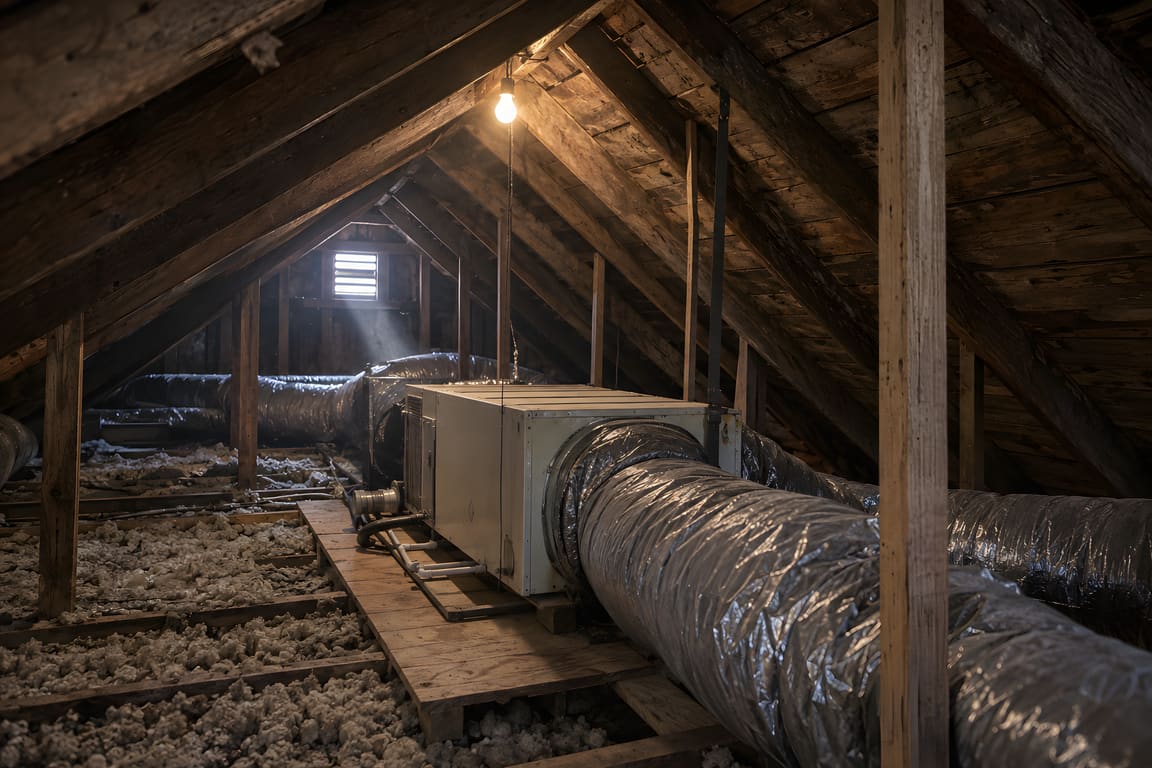
A heat pump moves heat rather than making it by burning fuel. The Rhode Island Office of Energy Resources explains that the outdoor unit's refrigerant absorbs heat from the outside air, and that heat can be drawn from the air even when it is very cold out. The U.S. Department of Energy says some of the newer technologies can deliver heating in extremely cold regions such as New England. The Rhode Island office says modern cold climate heat pumps are more than capable of heating a home, even on very cold Rhode Island winter days.
The Rhode Island office recommends weatherizing the house first and sizing the system properly, both covered below, to get good comfort.
For comfort, ENERGY STAR and the Rhode Island office advise picking a temperature and leaving it there instead of turning it down when you leave. Our blog post on what temperature to set a heat pump to in winter goes into that.
Defrost and Snow
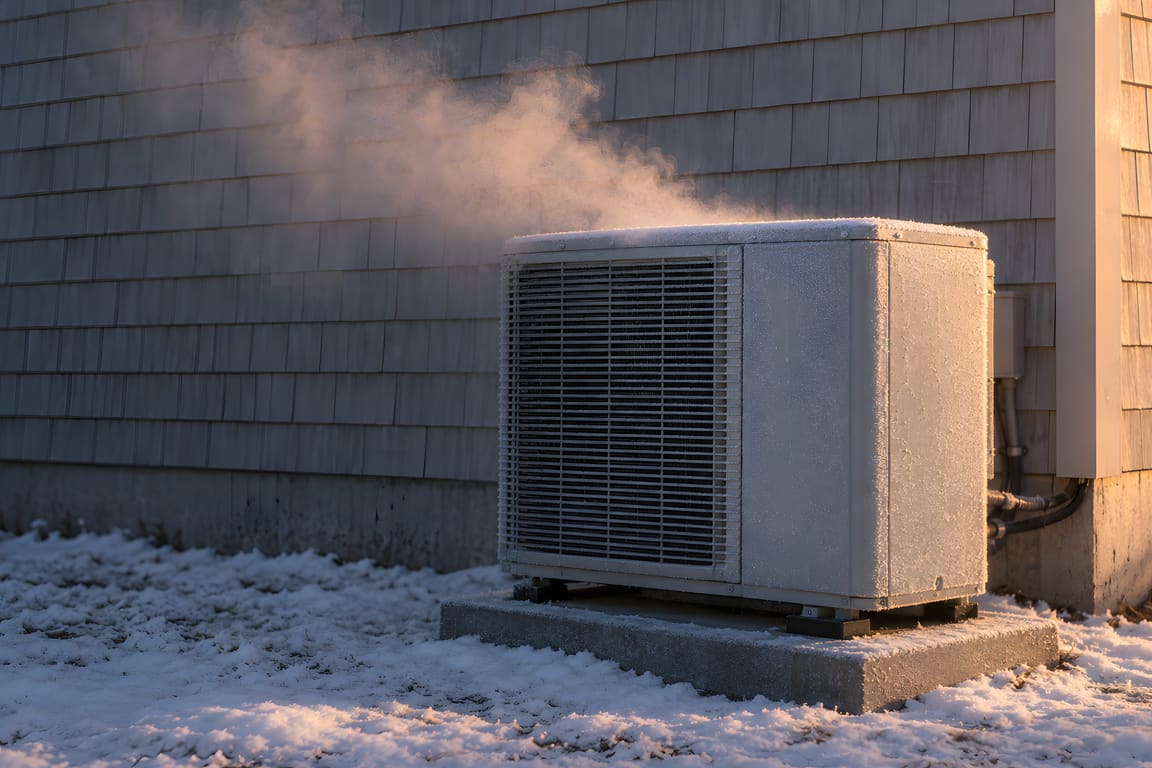
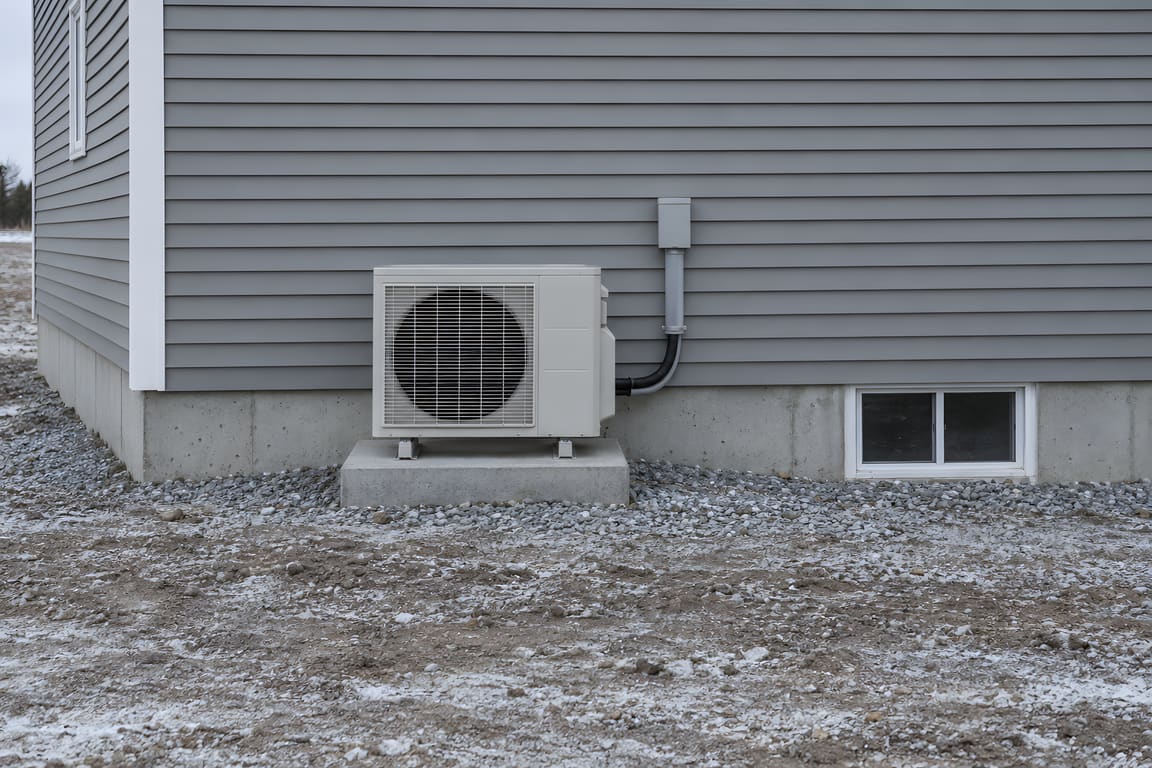
ENERGY STAR says outdoor units release water when they defrost in the winter, which can form icy patches. It advises avoiding an outdoor unit location near doors and windows and checking the spot with roof runoff in mind. If you see steam come off your unit, our blog post on the defrost cycle explains what you are looking at and when it points to a problem.
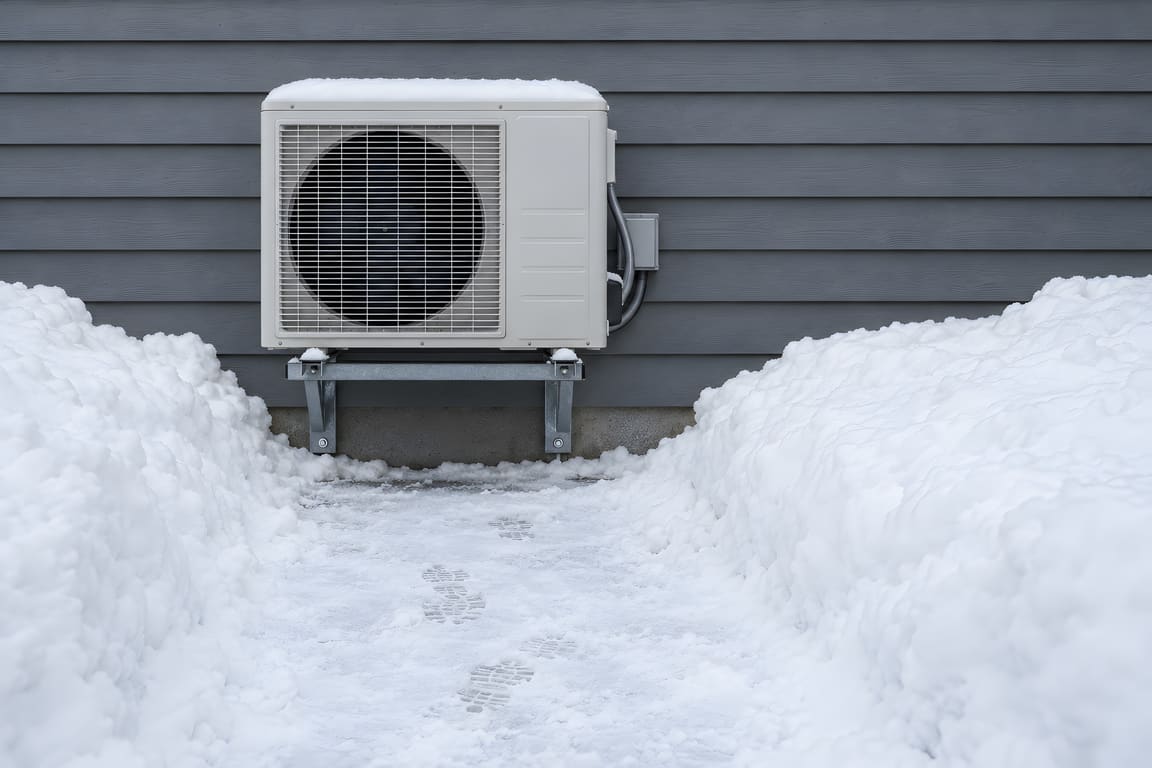
The Rhode Island Office of Energy Resources says outdoor units are always raised above the ground to keep the internal fan above snow. It lists clearing the units of snow, ice and debris as routine upkeep and says good air flow around the indoor and outdoor units is critical to efficient operation. ENERGY STAR likewise says to prioritize unobstructed airflow and avoid tight placements with shrubs or structures.
Backup Heat
ENERGY STAR says that pairing a cold climate heat pump with a backup energy source will heat your home most efficiently when temperatures are even lower than 5°F, and that a good contractor will work with you to determine the size and the potential integration with a backup heating system that fits your home.
The Rhode Island office describes one way to run it. If you keep your old system as a backup, set its thermostat 5 to 10 degrees below the heat pump's, and turn it up a few degrees in very cold weather to supplement. A contractor can also install integrated controls to manage this. If your backup is an oil system, see switching from oil heat to a heat pump.
Mini-Splits Count Too
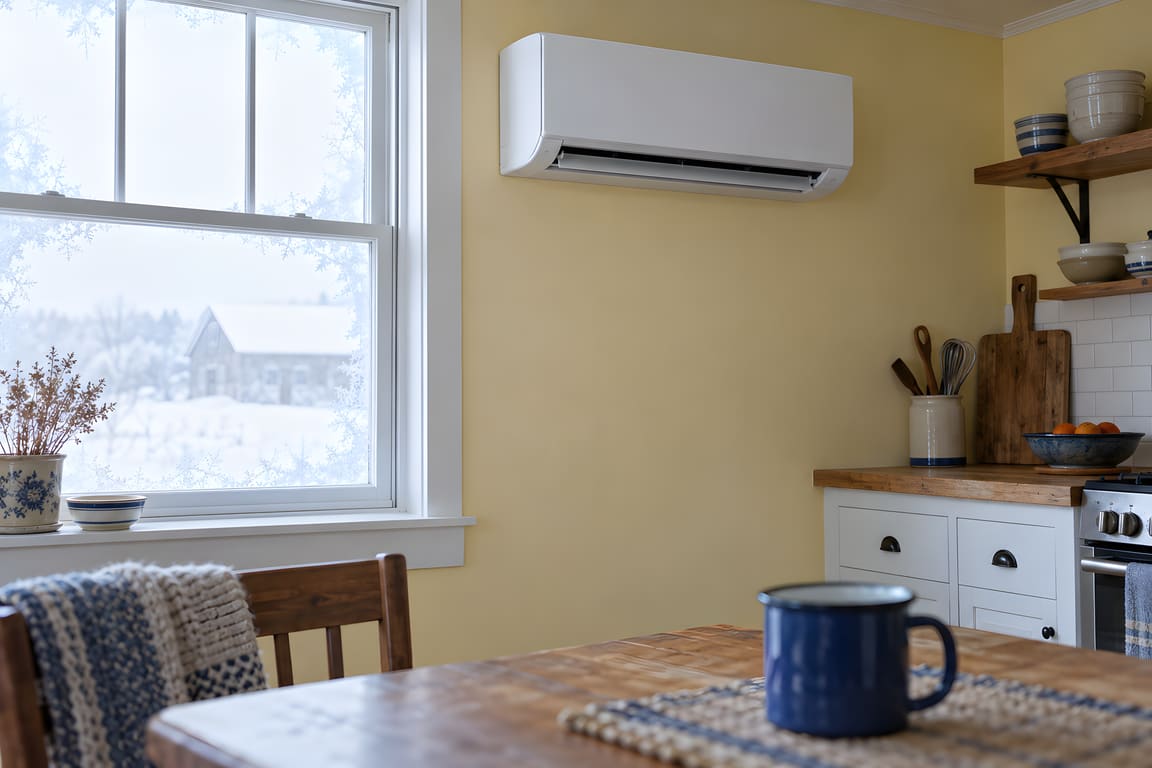
ENERGY STAR's page on ductless heating and cooling says many new ENERGY STAR certified mini-split models excel at providing space heating even in the coldest of climates, and gives the same 5°F test and the same note about backup heat. When you ask a contractor for a cold climate model, ask for it by that name, whether the system is ducted or ductless. See ductless mini-splits and heat pumps.
Sizing a Cold Climate Heat Pump
ENERGY STAR says a system that is too large or too small for the space will struggle to meet your needs, and that the contractor should verify the size with a Manual J calculation of the heating and cooling your home requires. The Rhode Island office adds that heating and air conditioning systems have traditionally been oversized, and that comfort increases and costs decrease when a heat pump is properly sized.
It also recommends a load calculation, a blower door test to find where air leaks, and telling the contractor which rooms run too hot or too cold. NEEP says its list is meant to give contractors assurance that equipment will have the required heating capacity at design temperature without unnecessary oversizing.
What to Ask Before You Buy
- Is this model an ENERGY STAR certified cold climate heat pump, and is it on the NEEP list?
- Will you size it with a Manual J load calculation?
- Will you check the existing ducts for damage and leaks? (ducted systems)
- How will the backup heat work, and how will the controls be set up?
- Where will the outdoor unit go, and how will it stay clear of snow, roof runoff and doorways?
- What information can you give me on rebate programs? Equipment rules are on our rebates page.
Questions 1 to 3 and 6 follow ENERGY STAR's bid checklist and its cold climate guidance. Questions 4 and 5 follow the Rhode Island Office of Energy Resources and ENERGY STAR.
Cold Climate Heat Pump Questions
What does cold climate mean on a heat pump?
For ENERGY STAR, it means third-party verified low-temperature performance, with air-source heat pumps tested down to 5°F. ENERGY STAR says a cold climate heat pump keeps working below 5°F.
Will a heat pump heat my house below 5°F?
ENERGY STAR says a cold climate heat pump continues working below 5°F, and that pairing it with a backup source heats the home most efficiently when it is even colder. The Rhode Island Office of Energy Resources says modern cold climate heat pumps are more than capable of heating a home on very cold Rhode Island days.
Do I need a backup heat source?
The sources differ in emphasis. The Rhode Island office says modern cold climate heat pumps are more than capable of heating a home, and ENERGY STAR says a backup source heats the home most efficiently when it is even colder than 5°F. Your house and your sizing decide it.
Is it normal for the outdoor unit to drip or ice up in winter?
ENERGY STAR says outdoor units release water when they defrost in the winter, which can form icy patches, so placement near doors and windows is worth avoiding. If you are not sure whether what you see is normal, see our defrost cycle post or heat pump repair and service.
How do I know a model is really cold climate?
Ask for an ENERGY STAR certified cold climate air-source heat pump by name, and check the model against ENERGY STAR's Product Finder or the NEEP product list.
Choosing a heat pump for a Rhode Island winter? We look at your house, your current system and your goals at the estimate, then tell you plainly what fits. Get a Free Estimate
Sources: ENERGY STAR, Air-Source Heat Pumps; ENERGY STAR, Ductless Heating and Cooling; ENERGY STAR, Heating and Air Conditioning Installation Bid Comparison Checklist; U.S. Department of Energy, Cold Climate Air-Source Heat Pumps; Rhode Island Office of Energy Resources, Residential Guide to Air Source Heat Pumps; NEEP, Cold Climate Air-Source Heat Pump Product List (checked November 9, 2026).
Related guides: Heat Pump or Furnace for a Rhode Island Home? and Switching From Oil Heat to a Heat Pump in Rhode Island