 A Rooftop Power Company

Home / Guides / How Long Do Furnaces, Boilers and Air Conditioners Last
How Long Do Furnaces, Boilers and Air Conditioners Last?
Your furnace, boiler or air conditioner is getting older and you want to know how much time it has. This guide gives the lifetime figures the U.S. Department of Energy's Federal Energy Management Program uses, what ENERGY STAR says about equipment age, and why those two sets of numbers are not the same thing. It is written for homeowners in Rhode Island and Massachusetts.
How Long Do Furnaces, Boilers and Air Conditioners Last?
The U.S. Department of Energy's Federal Energy Management Program assumes an average residential furnace lifetime of 21 years, a gas boiler lifetime of 20 years and, for northern states, a central air conditioner life of 24 years when it compares models. These are cost-comparison assumptions, not a date for your equipment, and age is only one thing to weigh.
The program uses these numbers to add up energy cost over a unit's years of use when it compares one model with another. They tell you how the comparison is built. They do not say when a particular furnace, boiler or air conditioner will stop working.
Furnaces
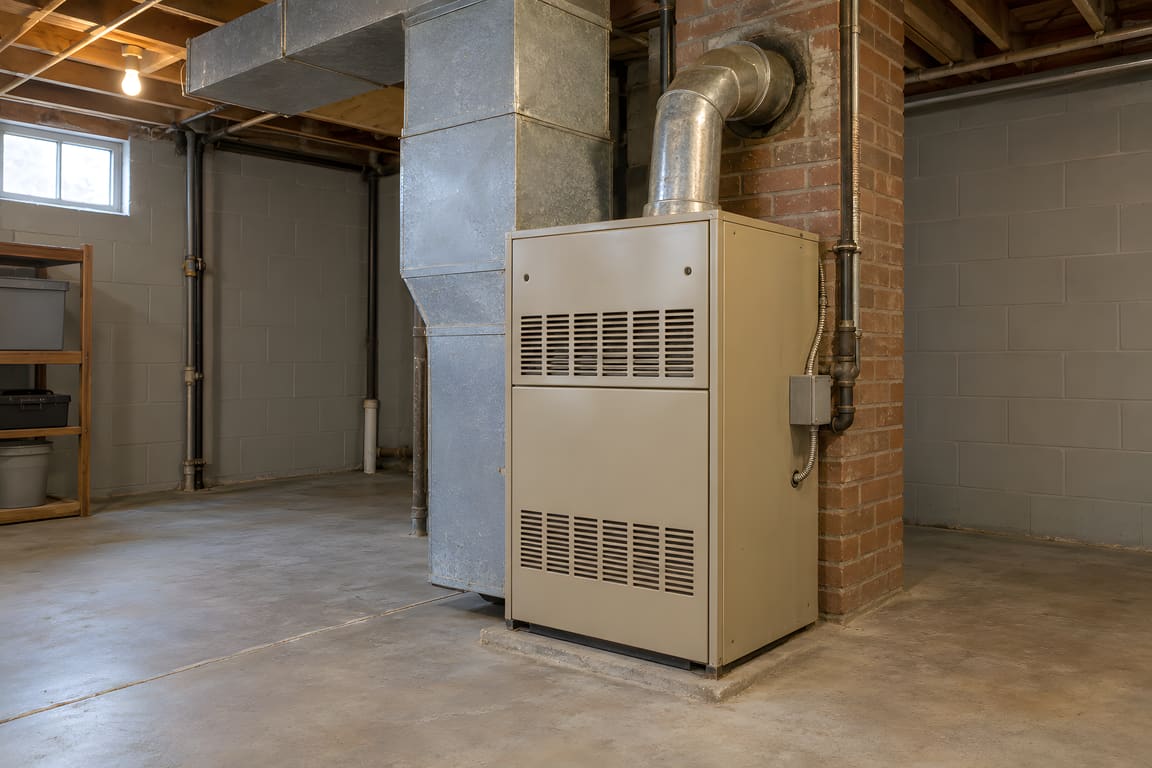
On its page for residential furnaces, the program says it assumed an average residential furnace lifetime of 21 years in its cost tables. That is the figure behind the comparison, and it is an assumption.
ENERGY STAR gives a separate age sign for furnaces, covered below. If you are reading an AFUE rating on a furnace, our guide to SEER2, HSPF2 and AFUE explains what the letters mean, and our furnace replacement page covers what to settle before a new one goes in.
Gas Boilers
The program's boiler page assumes, for its residential gas boiler table, a lifetime of 20 years in its comparison of models. Like the furnace figure, it is a cost-table assumption.
That page is about gas boilers, and the pages used for this guide give no lifetime figure for any other kind of boiler. If your house has a boiler, our boiler repair and replacement page covers what service and replacement look like.
Central Air Conditioners
The program's page on residential central air conditioners works three examples by region and uses a different life in each. It uses 18 years for hot-humid states, 25 years for hot-dry states and 24 years for northern states.
The page defines the northern group as all states not included in the hot-humid and hot-dry states. Rhode Island and Massachusetts are on neither of the other two lists, so the 24-year example is the one that fits our states. As with the others, it is an assumption in a cost table. Our AC replacement page covers the replacement side.
Heat Pumps
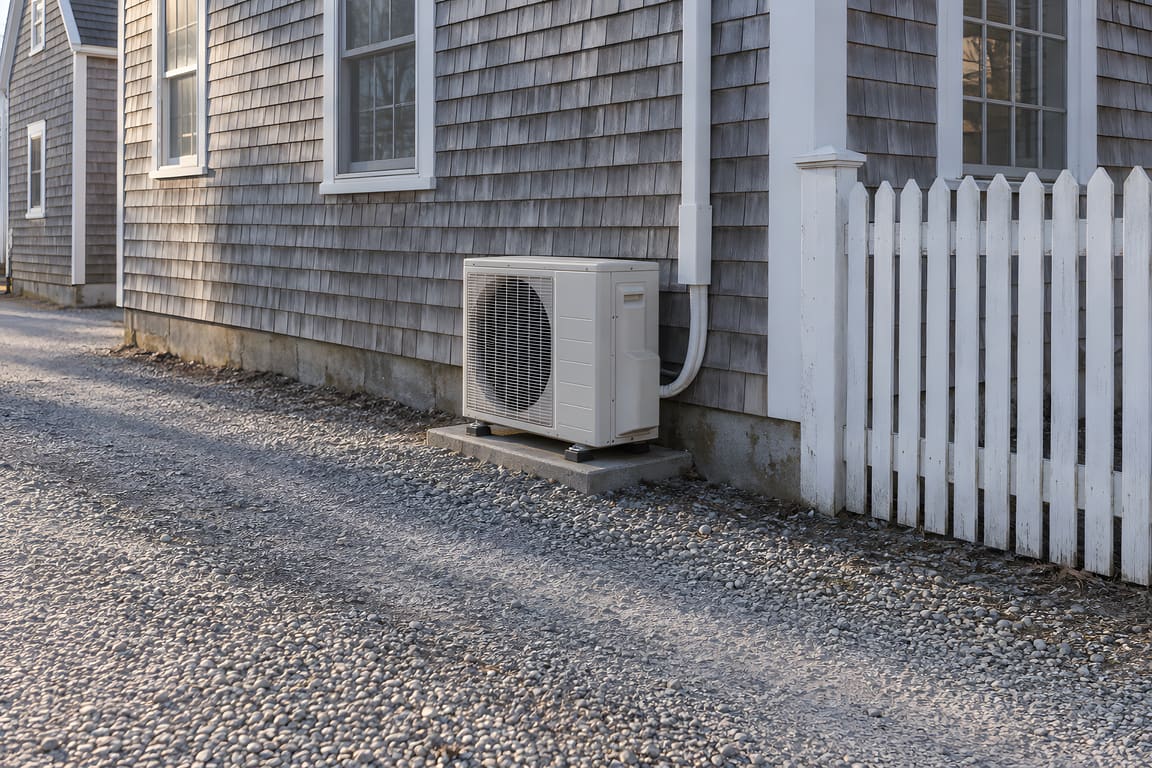
For an air-source heat pump, the same program uses an average residential life of 15 years in its comparison tables. Our guide to how long heat pumps last covers that figure and what that agency says can shorten a heat pump's life.
What ENERGY STAR Says About Age
ENERGY STAR's page on when to replace equipment says, "It may be time to call a professional contractor to help you make a change if:" and then lists "Your heat pump or air conditioner is more than 10 years old." and "Your furnace or boiler is more than 15 years old." Its list also includes equipment that needs frequent repairs while energy bills go up, rooms that are too hot or too cold, and a noisy system.
These are signs that it may be time to talk with a contractor. ENERGY STAR does not call them lifespans.
Why the Numbers Do Not Make a Range
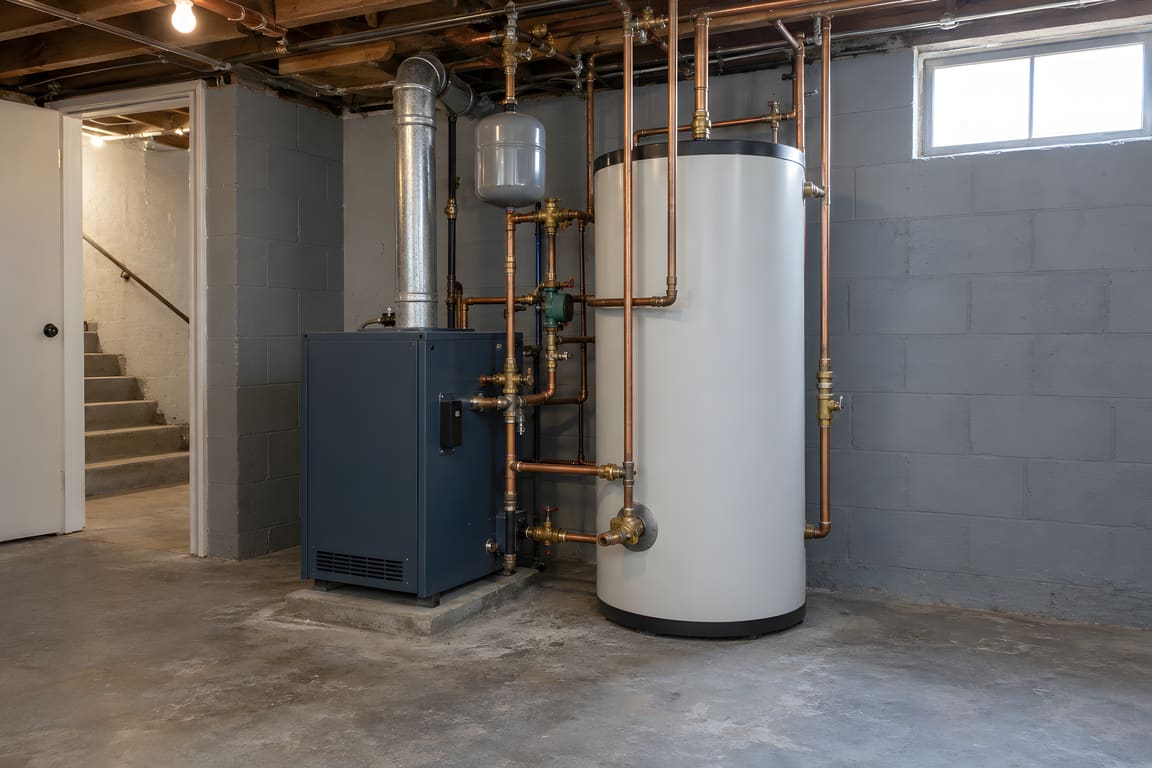
The Federal Energy Management Program's figures are lifetimes assumed so that energy cost can be added up in a buying comparison. ENERGY STAR's ages are points at which it says to consider a contractor. They answer different questions, so they do not combine into one range for a furnace, a boiler or an air conditioner.
ENERGY STAR's age sign is a prompt to look at repairs, comfort and energy bills together.
Installation Counts Too
The Federal Energy Management Program's page on residential air-source heat pumps says: "Installation problems like oversizing, improper charging, and leaky ducts result in efficiency losses, occupant discomfort, and shortened equipment life." That page is about heat pumps, and oversizing and leaky ducts are worth asking about on any system.
ENERGY STAR's installation bid checklist says proper equipment size is vital for maximizing efficiency and comfort, and that the contractor should calculate your home's heating and cooling loads using the Air Conditioning Contractors of America (ACCA) Manual J or equivalent. It also says improper installation can reduce performance by as much as 30%.
Repair, Replace or Wait
Write down the age of the equipment, what repairs it has had and what is bothering you now. With those in hand, ask for a repair and a replacement priced side by side. Our pages on furnace repair and AC repair cover the repair side. We serve all of Rhode Island and Massachusetts.

Furnace, Boiler and Air Conditioner Lifespan Questions
How long does a furnace last?
The U.S. Department of Energy's Federal Energy Management Program assumed an average residential furnace lifetime of 21 years in its cost tables. That is an assumption used to compare models, not a prediction for one furnace. ENERGY STAR separately lists a furnace or boiler more than 15 years old as a sign it may be time to call a contractor.
How long does a boiler last?
The program's boiler page assumes, for its residential gas boiler table, a lifetime of 20 years in its comparison of models. That is a cost-table assumption for gas boilers, not a date for your boiler. ENERGY STAR lists a boiler more than 15 years old as a sign it may be time to call a contractor.
How long does an air conditioner last?
The program's page on residential central air conditioners uses 18, 25 and 24 years in its three regional examples, and 24 years is the northern example. Those are cost-table assumptions. ENERGY STAR lists an air conditioner more than 10 years old as a sign it may be time to call a contractor.
Is a 16-year-old furnace at the end of its life?
Not necessarily. ENERGY STAR lists a furnace or boiler more than 15 years old as a sign it may be time to call a contractor, and the program's 21-year furnace figure is an assumption, not a limit. Frequent repairs, rising energy bills, uncomfortable rooms and noise are also worth weighing.
Can installation affect how long equipment lasts?
The program's page on air-source heat pumps says installation problems like oversizing, improper charging and leaky ducts result in efficiency losses, occupant discomfort and shortened equipment life. That page is about heat pumps. ENERGY STAR's bid checklist has questions on sizing and ducts that you can put to any contractor.
Wondering where your equipment stands? We look at your current system, your layout and your goals, then tell you plainly whether it makes sense. Get a Free Estimate
Sources: U.S. Department of Energy, Federal Energy Management Program, Purchasing Energy-Efficient Residential Furnaces, Purchasing Energy-Efficient Boilers, Purchasing Energy-Efficient Residential Central Air Conditioners and Purchasing Energy-Efficient Residential Air-Source Heat Pumps; ENERGY STAR, When Is It Time to Replace? and the Heating & Air Conditioning Installation Bid Comparison Checklist (checked November 16, 2026).
Related guides: How to Compare HVAC Estimates and Heat Pump or Furnace for a Rhode Island Home?